
Table of Contents
Scaffolding couplers ensure the safety of scaffolding systems. Choosing the right scaffolding couplers ensures safety on the construction site and improves productivity. The following is a detailed guide to selecting scaffolding couplers.
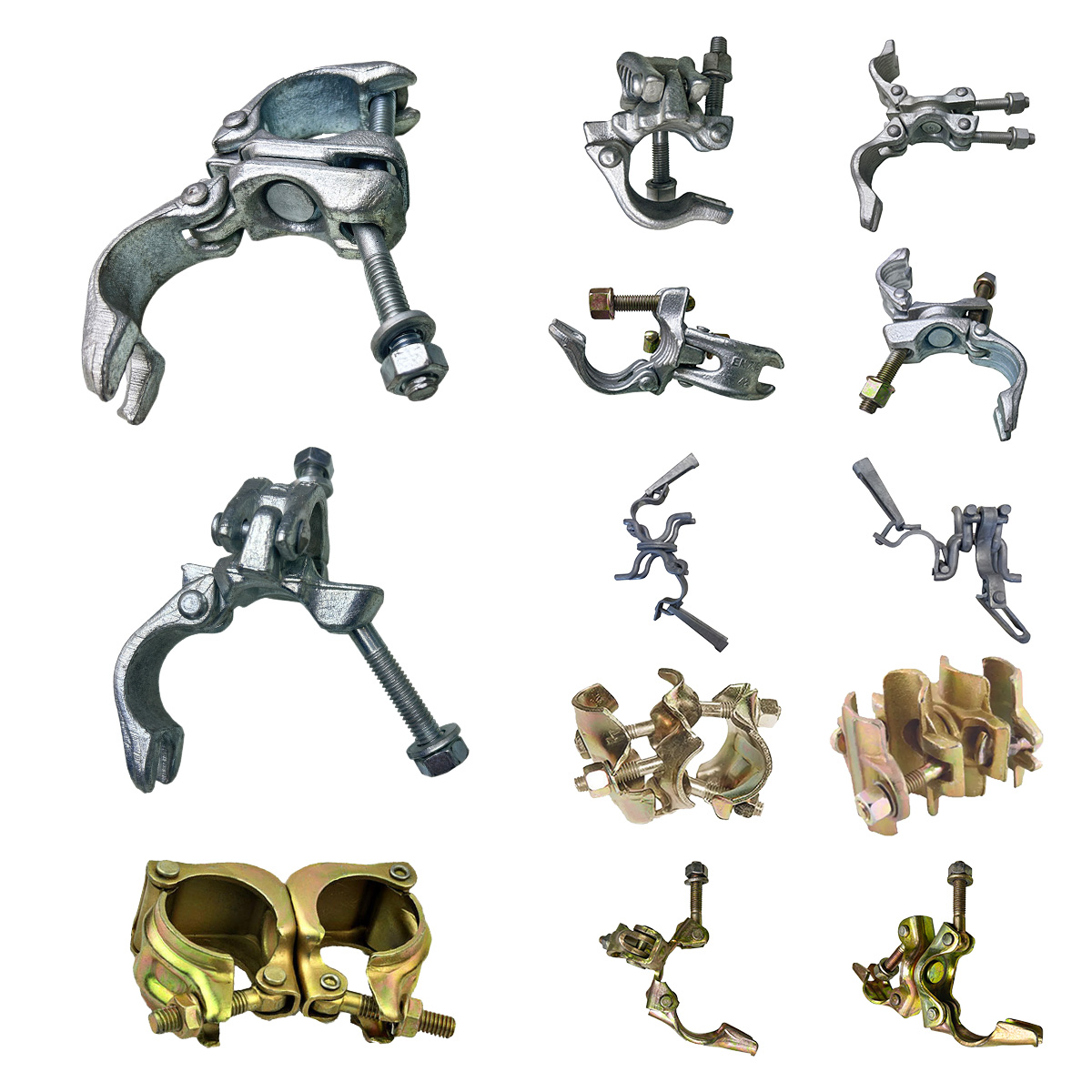
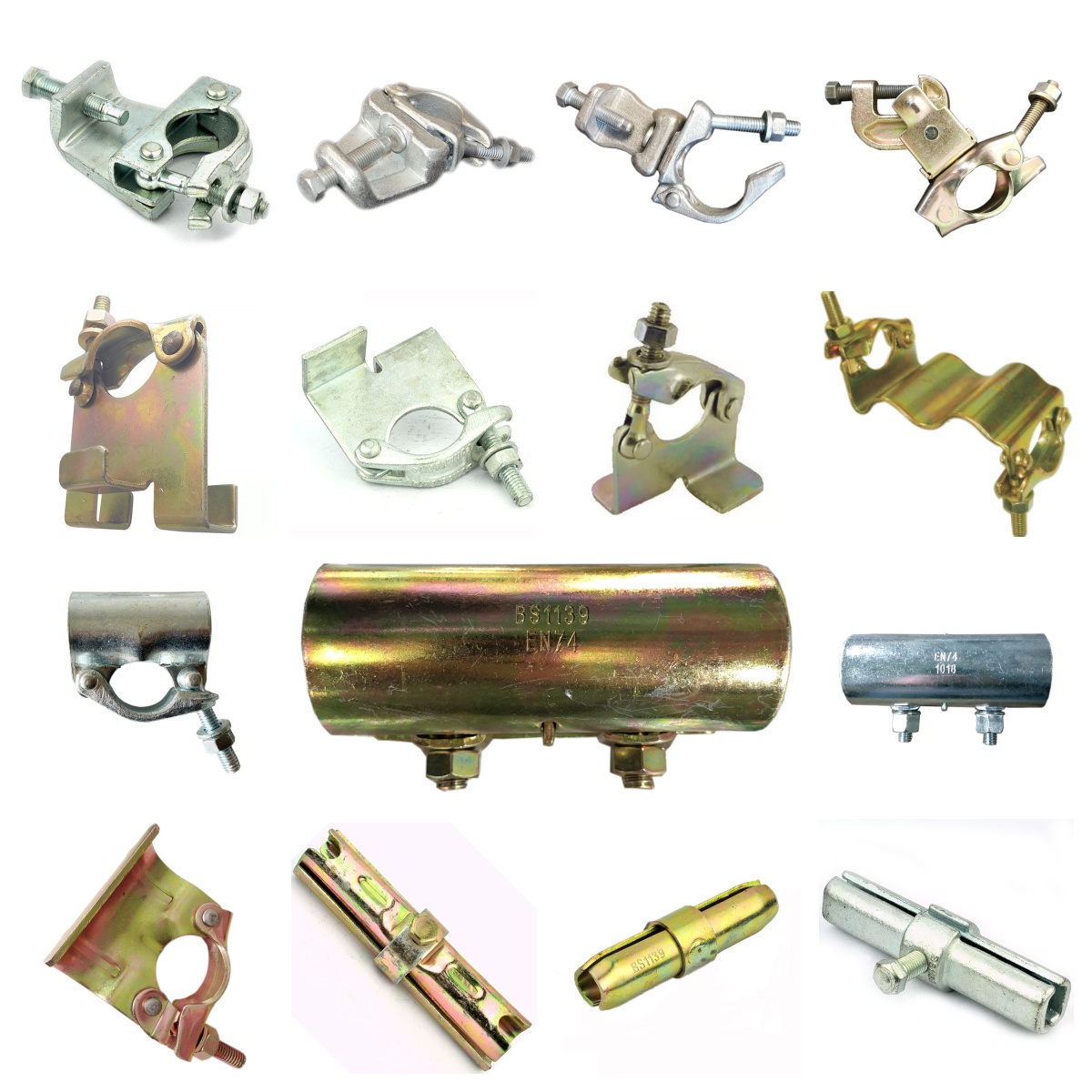
How To Choose Scaffolding Coupler?
Connection Angle
Use right-angle couplers for vertical connections of steel pipes;
Use swivel couplers for non-vertical, intersecting connections of steel pipes;
Use sleeve connectors for end-to-end connections of steel pipes;
Scaffolding Coupler Types
Right Angle Coupler
Right-angle couplers are one of the most commonly used couplers in scaffolding systems, used to connect two scaffolding tubes at a right angle. They are typically used to connect horizontal bars to vertical posts to build a stable scaffolding structure.
Swivel Coupler
Swivel couplers allow two scaffolding tubes to be connected at different angles, typically used to connect diagonal braces or to secure scaffolding tubes on uneven surfaces.
Sleeve Coupler
External couplers connect two scaffolding tubes end-to-end, forming a straight connection, allowing for the construction of long-distance scaffolding systems.
Putlog Coupler
Used to connect beams to horizontal bars, typically not used as load-bearing fasteners. Putlog couplers are lighter than right-angle couplers.
Board Retaining Coupler
Board retaining couplers are used to secure scaffolding walk boards to the scaffolding structure, preventing the boards from moving.
Beam Coupler
Beam clamps are used to connect scaffolding tubes to steel beams.
Standards
ISO 9001 for quality management.
ANSI/ASSE scaffolding standards in the U.S.
BS EN 74 for Europe.
Materials
Common couplers are made of steel and aluminum.
Steel scaffolding couplers are typically used in heavy-duty construction scenarios, possessing strong tensile and shear strength, making them ideal for high-load, industrial scaffolding and support structures.
Aluminum scaffolding couplers are typically used with aluminum scaffolding systems. They are much lighter than steel couplers, making them easy to handle, and are suitable for low-load, flexible construction projects.
Manufacturing Methods
There are two common manufacturing methods for steel scaffolding coupler: forged and pressed.
Forged coupler are formed from steel through a hot forging process, resulting in high dimensional accuracy, high strength, excellent impact resistance, and a long service life. They are suitable for harsh environments or long-term projects.
Pressed coupler are formed by pressed steel plates, and welding may be required. These stamped fasteners are usually lighter and cheaper than forged coupler, but have a lower load capacity. They are suitable for light-duty or short-term construction projects.
Surface Treatment
Appropriate surface treatment can extend the service life of coupler. Common surface treatments include hot-dip galvanizing and electro-galvanizing.
Hot dip galvanizing provides a thicker coating with excellent corrosion resistance, suitable for outdoor or coastal environments.
Electro galvanizing provides a thinner coating and is cheaper, but is less durable than hot-dip galvanized coupler in harsh production environments.
Pipe Compatibility
Choose the appropriate coupler based on the size of the steel pipes to be connected. Standard couplers are suitable for 48.3mm steel pipes; custom couplers are required for special pipe sizes.
Conclusion
Choosing the right scaffolding connectors is crucial for the success and safety of construction projects. The appropriate scaffolding coupler can be selected based on connection angle, pipe compatibility, fastener type, standards, materials, manufacturing method, and surface treatment to ensure the reliability and cost-effectiveness of the scaffolding system.