
Introduction
In the construction industry—particularly in projects involving high-altitude operations—a safe and stable scaffolding system is indispensable. Scaffolding screw jacks are utilized to level and secure the scaffolding structure, ensuring that the working platform remains horizontal and stable. This article provides a detailed overview of scaffolding screw jacks.
What Are Scaffolding Screw Jacks?
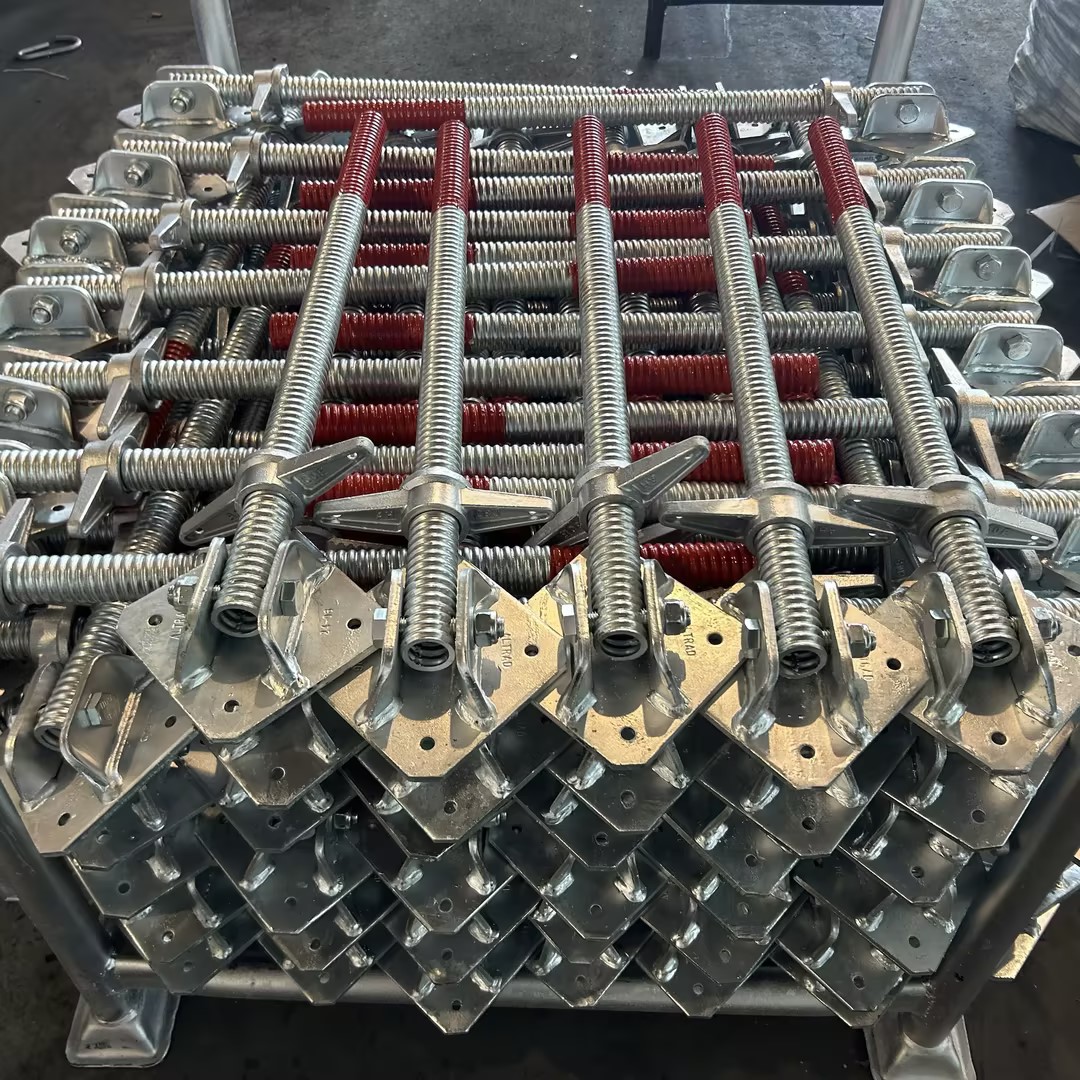
Also known as construction screw jacks or adjustable screw jacks, these devices are specifically designed to support scaffolding systems by facilitating the adjustment of both height and levelness. Comprising a threaded rod, a nut, and a base plate, scaffolding screw jacks enable precise height regulation and are widely employed across construction sites.
Surface Treatments for Scaffolding Screw Jacks
Scaffolding screw jacks can undergo various surface treatment processes to suit diverse construction environments and budgetary constraints.
EK Scaffolding offers four distinct surface treatment options: hot-dip galvanizing, electro-galvanizing, rust-inhibiting oil coating, and spray painting.
Surface Treatment Process | Hot-Dip Galvanizing | Electro-Galvanizing | Anti-Rust Oil | Painting |
Principle | The lead screw is immersed in molten zinc at high temperatures, forming a thick zinc-iron alloy layer on the surface. | Electrolytic equipment is used to deposit a thin layer of zinc onto the surface of the lead screw. | Industrial anti-rust oil is applied to the surface, forming a protective oxide film. | Powder or paint is sprayed onto the lead screw surface, followed by baking and curing. |
Characteristics | Extremely strong rust resistance; long service life (up to 5–10 years); thick zinc coating; relatively rough, silvery-white surface finish. | Aesthetically pleasing, flat, smooth, and glossy surface; however, the zinc coating is relatively thin, offering weaker rust resistance, and is prone to rusting if scratched. | Low viscosity; easy to apply; provides rapid and comprehensive coverage without leaving oil residue; easy to remove. | Customizable colors; relatively poor adhesion; the surface coating is prone to peeling, leading to rust formation. |
Rust Resistance | Extremely Strong | Moderate | Weak | Relatively Weak |
Service Life | Extremely Long | Moderate | Short | Relatively Short |
Cost | High | Medium | Low | Relatively Low |
Applicable Scenarios | High-end construction projects requiring high durability, long-term use, or located in high-humidity or coastal regions. | Indoor projects, dry environments, or scaffolding intended for short-term use. | Commonly used for temporary support structures in indoor settings or where general rust protection is sufficient. | Scenarios with limited budgets, temporary support requirements, or where rust resistance is not a critical priority. |
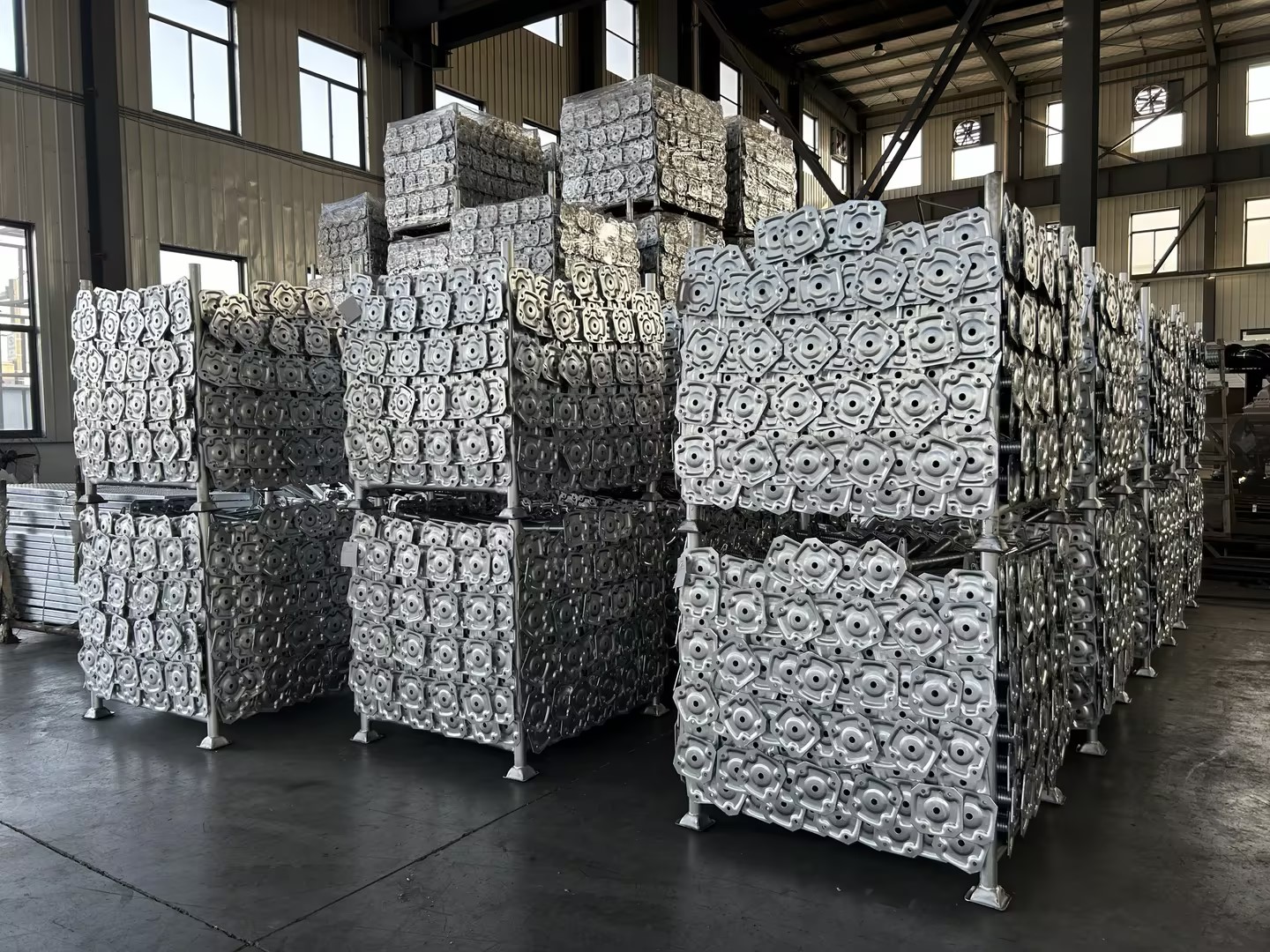
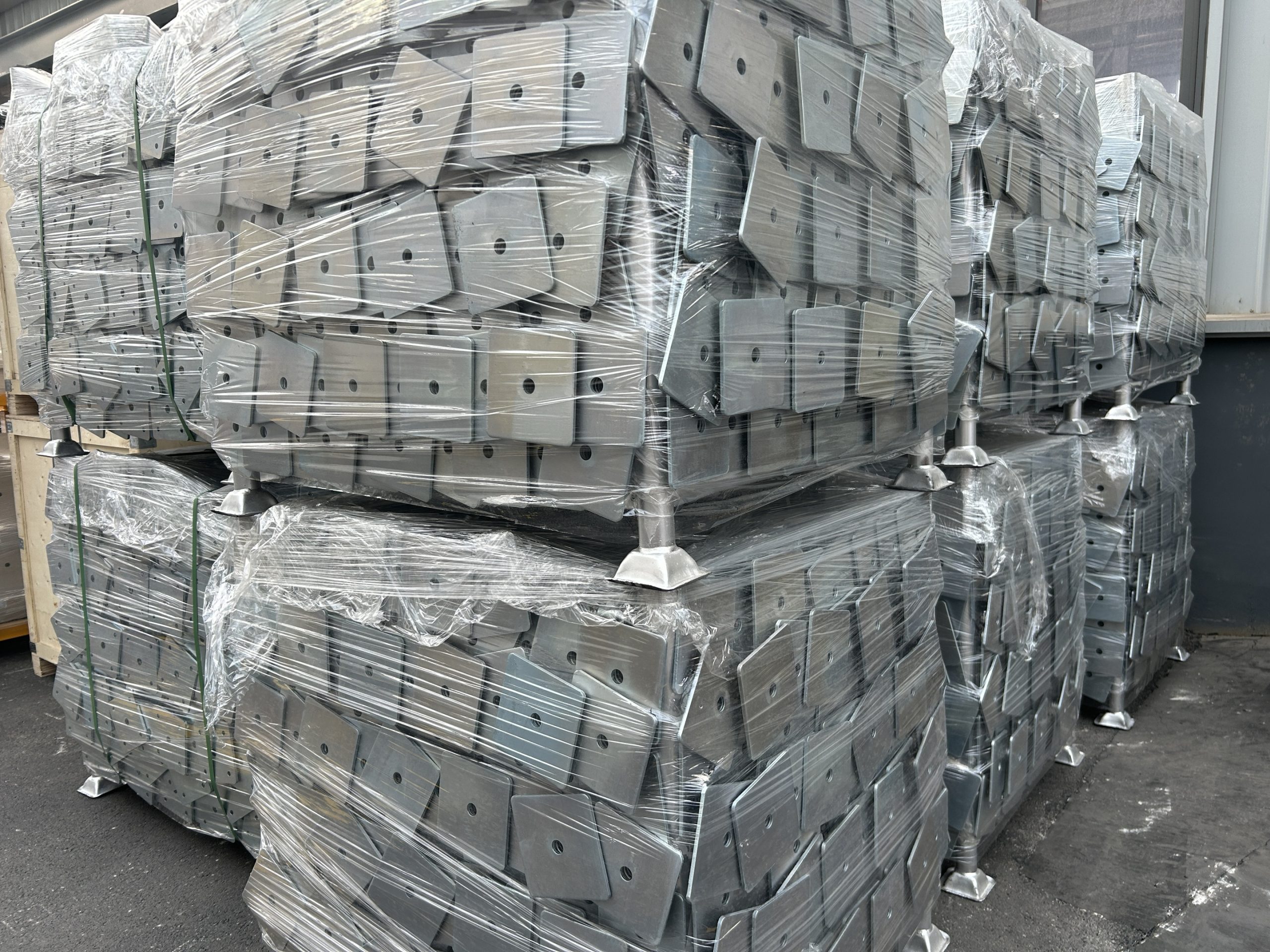
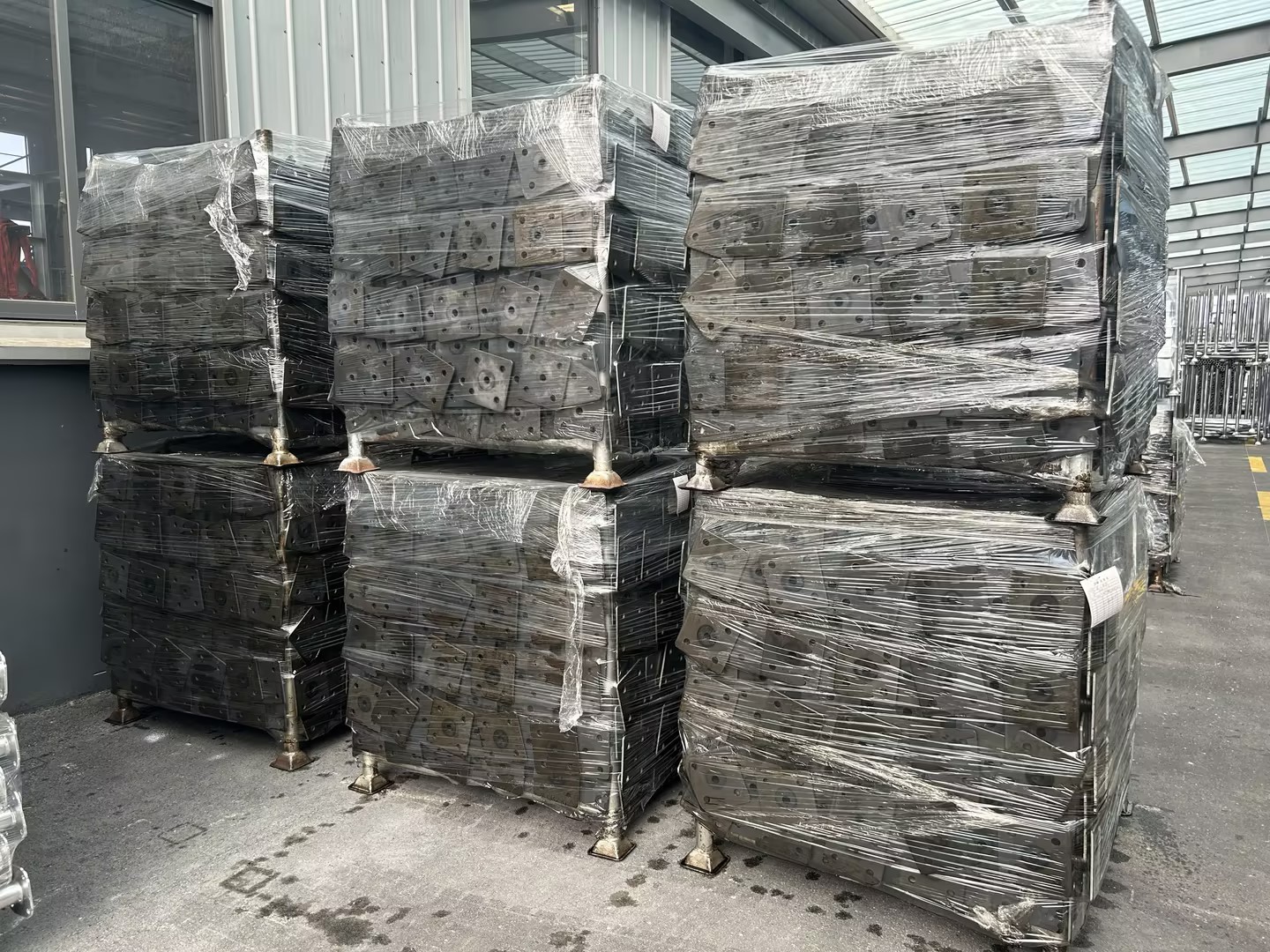
What are the different types of scaffolding screw jacks?
EK Scaffolding offers a wide range of scaffolding screw jacks in various sizes and specifications, compatible with a diverse array of scaffolding systems. Each type of screw jack serves a specific purpose within construction projects.
Base Jack Common Types
1.By Material
Solid Screw Jacks:Manufactured from solid round steel bars; the outer diameter (OD) typically ranges from 26mm to 48mm.
Hollow Screw Jacks: Manufactured from hollow steel tubing; common outer diameter specifications include 34mm, 38mm, and 48mm.
2.By Placement
U-Heads (Fork Heads):Positioned at the top of the scaffolding system to support beams or formwork systems.
Adjustable Base Jacks: Positioned at the bottom of the scaffolding system to adjust the height and level of the structure on uneven ground, thereby ensuring the stability of the scaffolding system.
3.By Application
Fixed Screw Jacks:Feature a non-rotating base plate welded at a right angle to the threaded rod; designed to distribute vertical loads and adjust the height of the scaffolding system.
Swivel Screw Jacks: Feature a freely rotating base plate, allowing them to adapt to steep slopes and rugged, uneven terrain.
Caster Jacks: A specialized type of scaffolding screw jack equipped with a wheel, enabling the easy mobility of the scaffolding system.
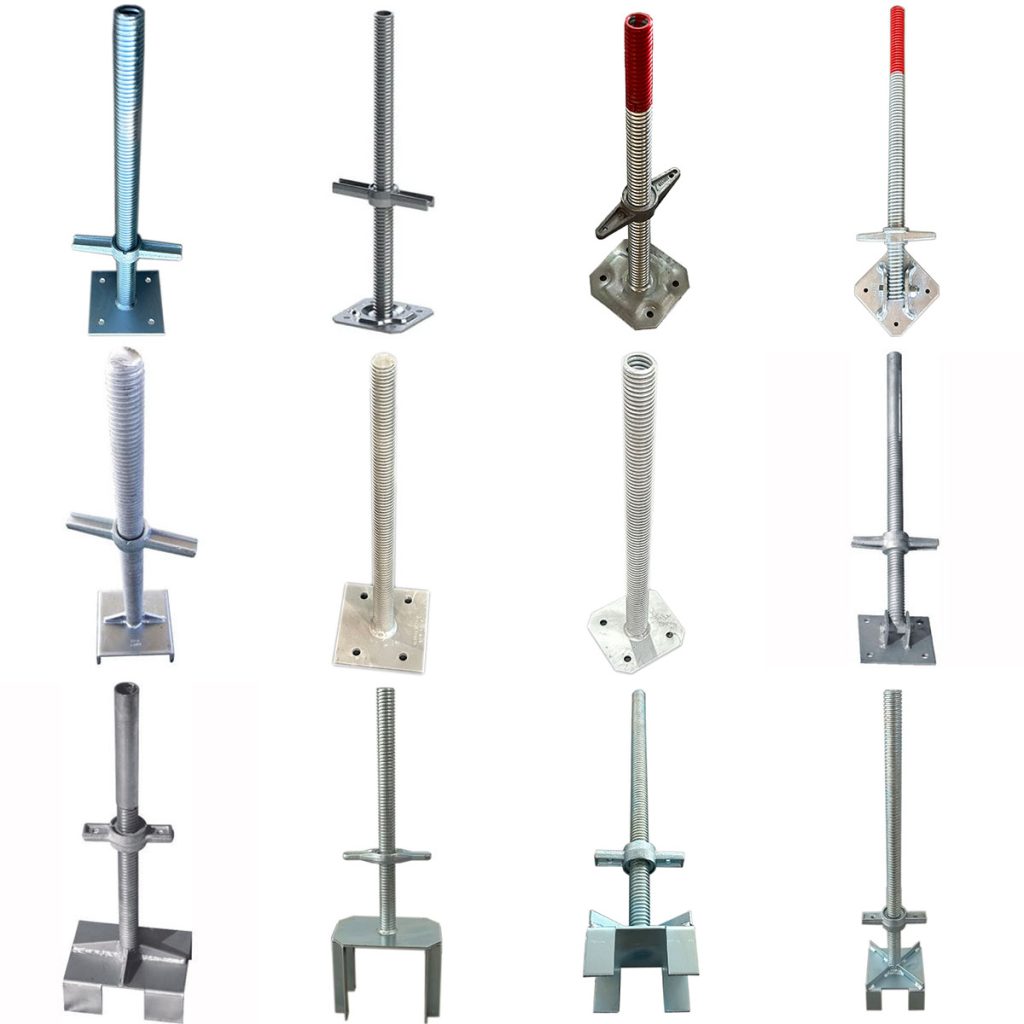
Scaffolding Screw Jack Specifications
| Parameter Item | Common Specification Range |
| Screw Diameter | 30mm, 34mm, 35mm, 38mm |
| Screw Type | Solid or Hollow |
| Screw Material Grade | Q235, Q345 (carbon structural steel), Q355, 20# steel |
| Total Height | 380mm, 400mm, 500mm, 550mm, 600mm, 650mm, 710mm, 750mm, 1000mm, 1500mm |
| Adjustable Stroke | 100mm-1300mm |
| Threading Process | Cold Rolled process |
| Matching Nut Lengths | 120mm, 150mm, 175mm, 200mm |
| Nut Manufacturing Processes | Cast nuts, Forged nuts |
| Base Plate Sizes | 120*120mm, 140*140mm, 150*150mm |
| Surface Treatment | Electro-galvanized, Hot-dip galvanized (HDG), Painted, Black parts (Rust-preventive oil). |
| Standards | EN74-1 / EN12811, ANSI / SSFI, AS1576 |
| Applications | Fixed, rotating |
EK Scaffolding also offers customized scaffolding screw jacks to meet specific client requirements. Base plate dimensions, adjustable heights, and overall specifications can be tailored to suit various scaffolding systems and construction needs.
What components make up a scaffolding screw jack?
A scaffolding screw jack typically consists of a threaded rod, a nut, and a base plate; each of these components can be customized according to client specifications.
Scaffolding Jack Nut
The nut serves as the adjustment mechanism within the scaffolding screw jack. By rotating the nut, the scaffolding system can be leveled to a uniform plane, thereby ensuring its stability. The nut functions both as a handle for adjusting height and as a load-bearing element capable of supporting heavy loads. Located at the center of the nut is a threaded bore designed to mate with the threaded rod; the threads feature anti-disengagement notches to prevent the nut from accidentally detaching.
Based on their manufacturing processes, common screw jack nuts can be categorized into forged nuts, cast iron nuts, and cast steel nuts.
|
Manufacturing Process |
Forging |
Cast Iron |
Cast Steel |
|
Cost |
Higher |
Lower |
Higher |
|
Durability |
High |
Moderate |
Higher |
|
Applications |
Heavy-duty Projects |
Heavy-duty Projects |
Standard Projects |
Threaded Rods
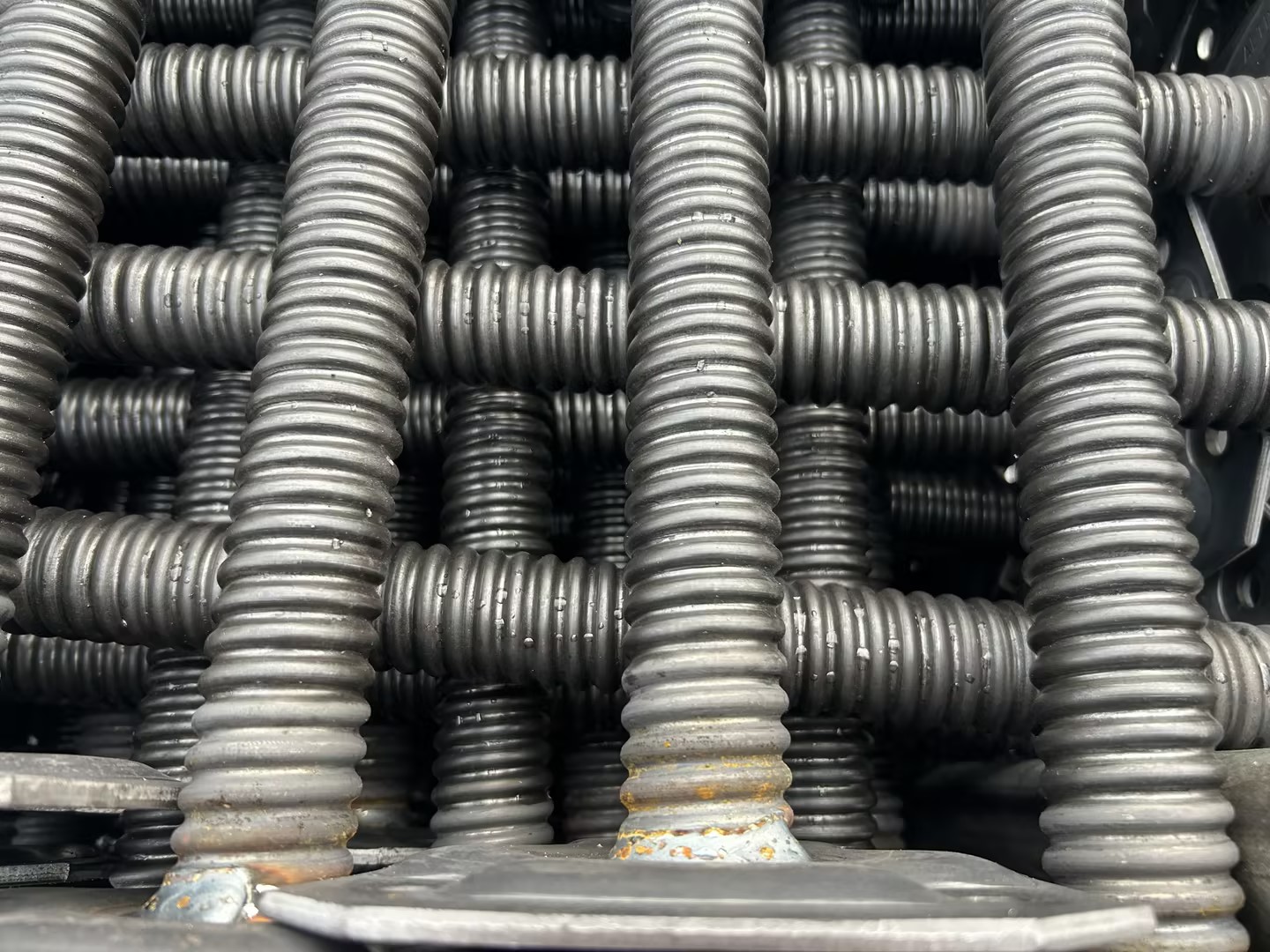
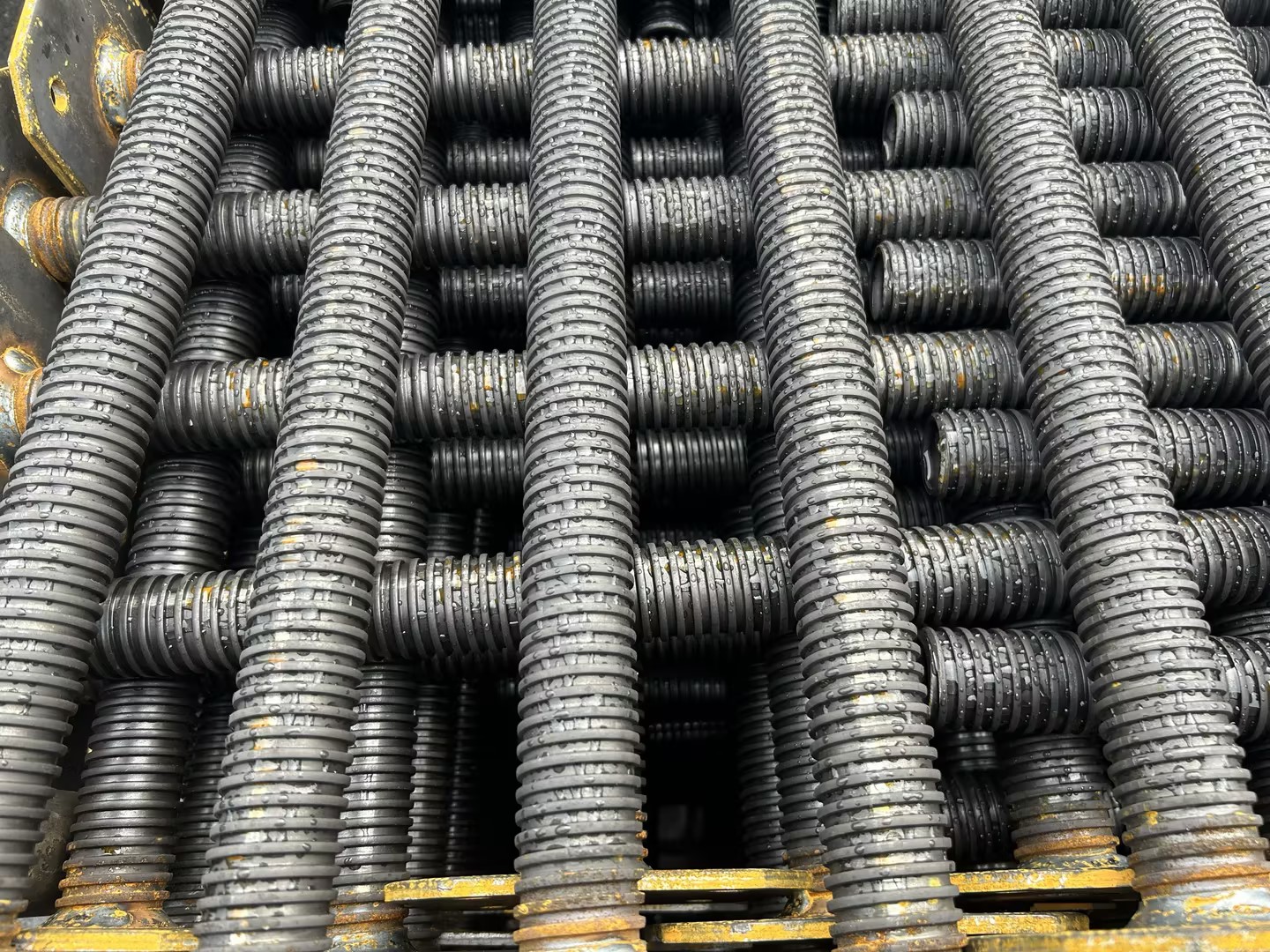
The fit between the nut and the threaded rod directly impacts the ease of rotation of the nut. Typically, threaded rods treated with hot-dip galvanization accumulate excess zinc within their grooves, necessitating a specialized post-processing treatment.
EK Scaffolding offers two threading options: Square Threads and Round Threads.
Square Threads: Feature a pitch (thread spacing) of 6.35mm (4 TPI—i.e., 4 threads per inch).
Round Threads: Feature a pitch of 8mm; these are commonly referred to as “coarse threads” or “quick-adjust threads.”
Common outer diameters for threaded rods include: 26mm, 28mm, 30mm, 32mm, 34mm, 35mm, 36mm, 38mm, 40mm, 42mm, and 48mm.
Limit Stops
To prevent the scaffolding screw jack from extending beyond its maximum height limit during use, limit stops must be incorporated into the threaded rod.
Common methods for creating these stops include spot welding and stamped grooves.
Spot Welding: Typically involves welding a small bead approximately 150mm from the top of the screw jack; this creates a physical barrier that prevents the nut from rotating past the designated height limit.
Stamped Grooves: Involves using a stamping process to press a notch or groove into the threaded rod at the specific location corresponding to the maximum height limit.
Note: The exact positioning of the limit stop relative to the end of the screw jack may vary depending on the specific design and intended application.
Base Plates
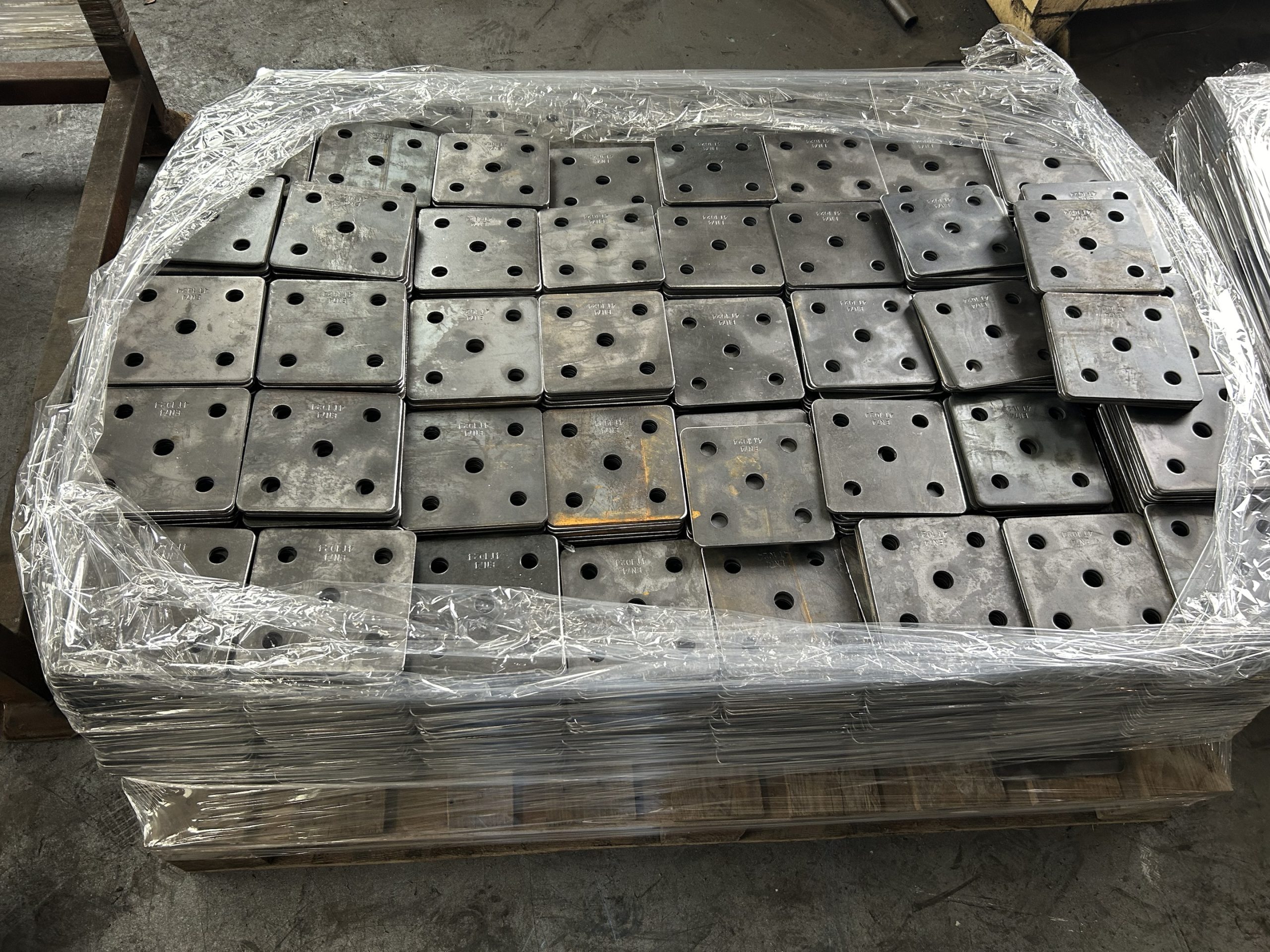
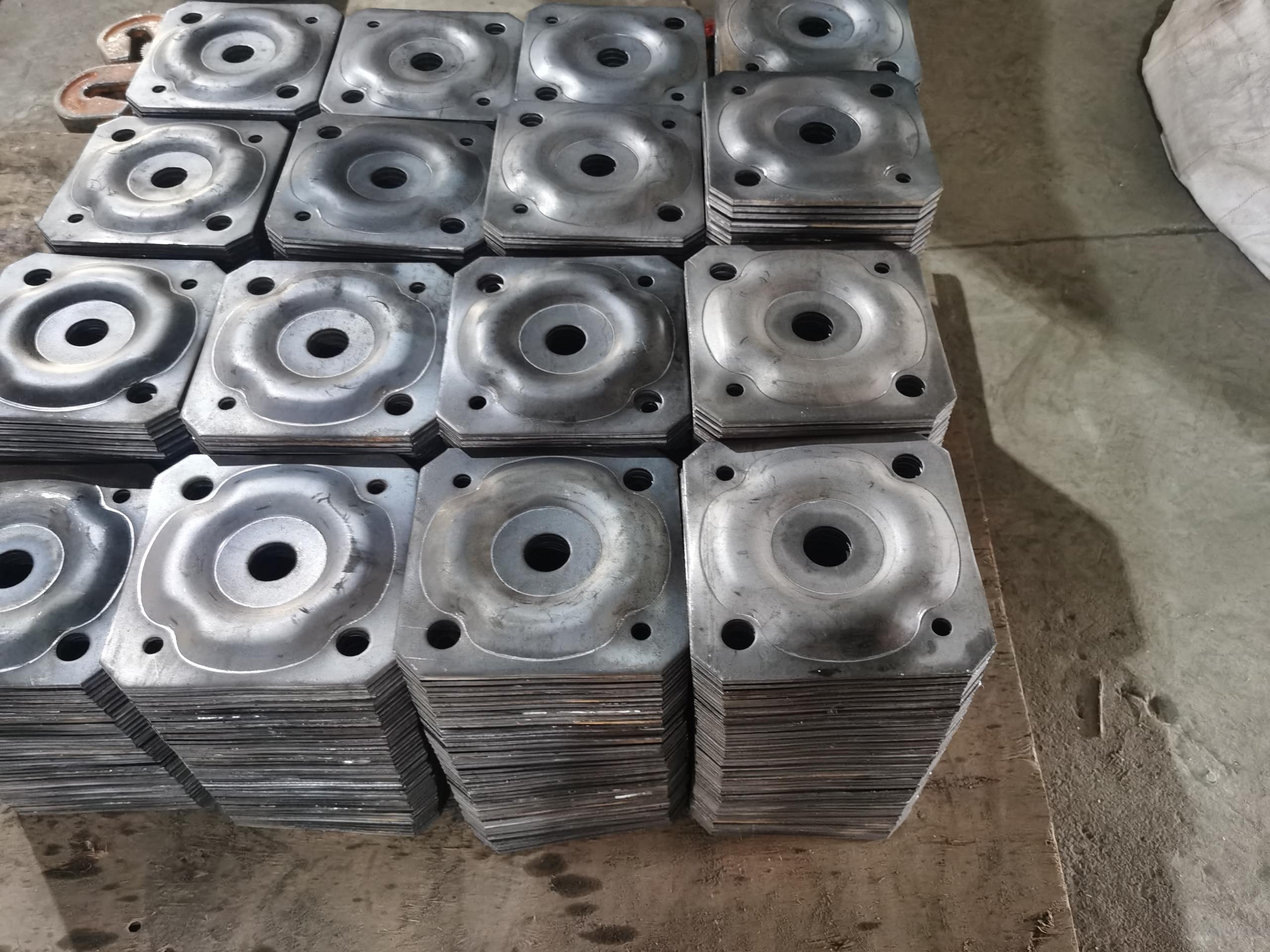
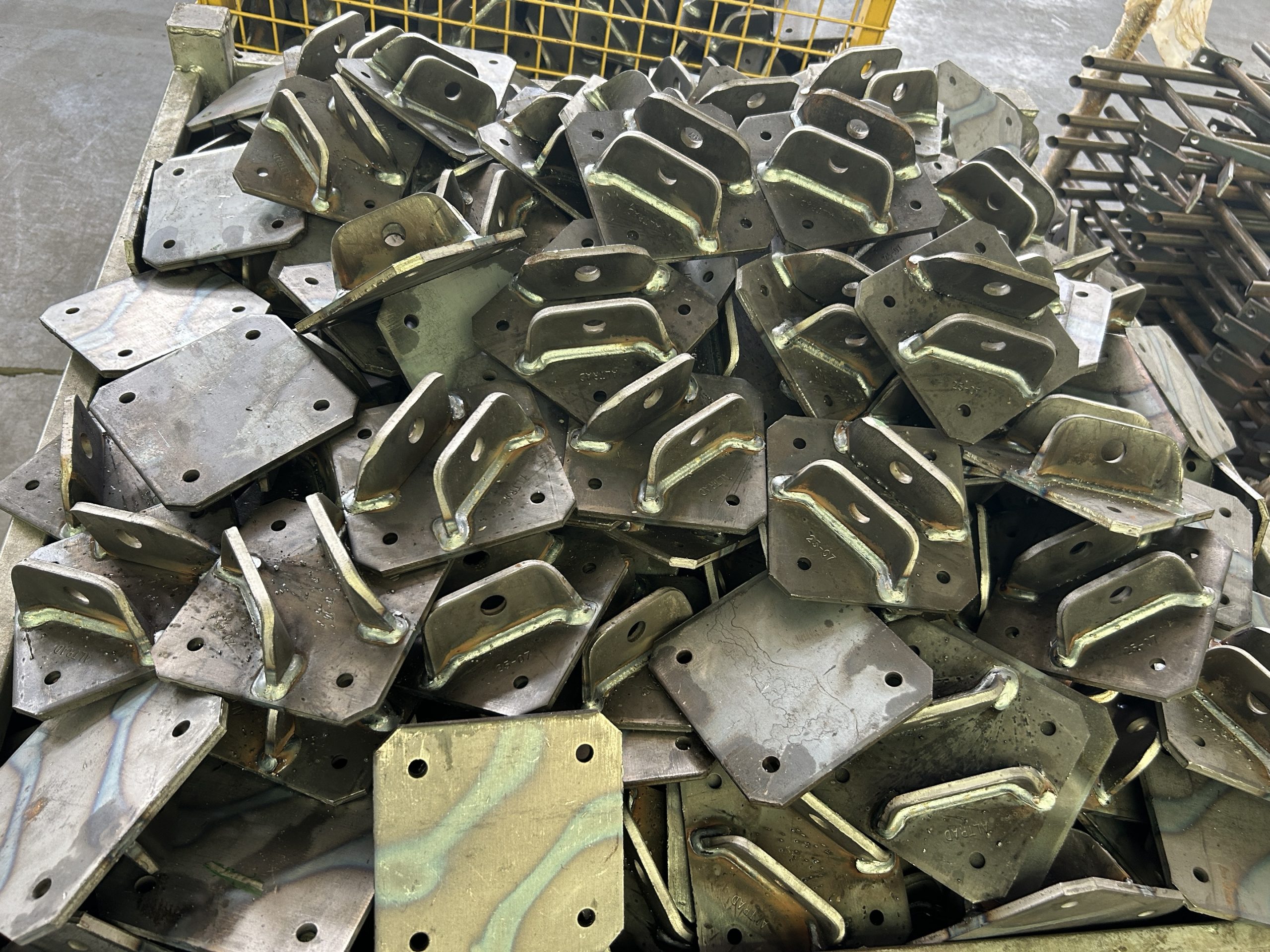
The scaffolding base plate serves as the foundation for the screw jack, providing the threaded rod with a flat, load-bearing contact surface. This ensures that the load is distributed evenly throughout the scaffolding system.
Scaffolding Base Plate Specifications
Dimensions: 120mm x 120mm, 140mm x 140mm, 150mm x 150mm
Thickness: 3mm – 8mm
Standards: EN74 and BS1139
Base Plate Types
Adjustable Base Plates: Feature a threaded pin design that allows for free height adjustment. In construction contexts, these base plates are often colloquially referred to as “Scaffolding Jacks.” The primary function of an adjustable base plate is to level the scaffolding when the ground surface is uneven, thereby ensuring the structure remains in a horizontal position.
Swivel Base Plate: Featuring a pin-and-socket design equipped with a swivel joint, this type is particularly suitable for construction sites where the ground surface is sloped or inclined.
Why Are Scaffolding Screw Jacks Necessary in Construction Projects?
In construction projects, the use of scaffolding screw jacks offers the following advantages:
- High Versatility: Compatible with a wide range of scaffolding systems, including Ringlock, Cuplock, Kwikstage, Frame, and Tube-and-Coupler systems.
- Simple Operation: The installation and adjustment processes are quick and straightforward.
- Cost-Effective: Helps minimize material waste, boosts work efficiency, and reduces overall construction costs.
- Height Adjustment: Allows for precise height adjustments, ensuring the scaffolding platform remains consistently level and stable.
- Safety and Stability: Provides a solid foundational support, effectively preventing the scaffolding from tilting or collapsing.
- Load Distribution: Facilitates the even distribution of loads across the entire scaffolding system, thereby preventing localized overloading.
Guidelines for Using Scaffolding Screw Jacks
To ensure the safe and efficient use of scaffolding screw jacks, please adhere to the following guidelines:
- Foundation Inspection: Place the screw jack on firm, level ground or atop a base plate to prevent sinking or instability.
- Maximum Adjustment Height: The maximum extension height is typically limited to between 12 and 18 inches.
- Insertion Depth: The portion of the screw jack inserted into the vertical standard (upright) must be no less than one-third of its total height.
- Safety Limits: Never rotate the adjustment nut beyond the safety limit point predetermined by the manufacturer.
- Regular Inspection: Strictly prohibit the use of any screw jacks that exhibit severe rust, deformation, cracks, or stripped threads.
Conclusion
By enabling height adjustments, scaffolding screw jacks provide a stable and level working platform for scaffolding systems, thereby ensuring both the safety and versatility of the structure. Selecting the appropriate scaffolding screw jacks can help your project reduce costs and enhance operational efficiency.