Table of Contents
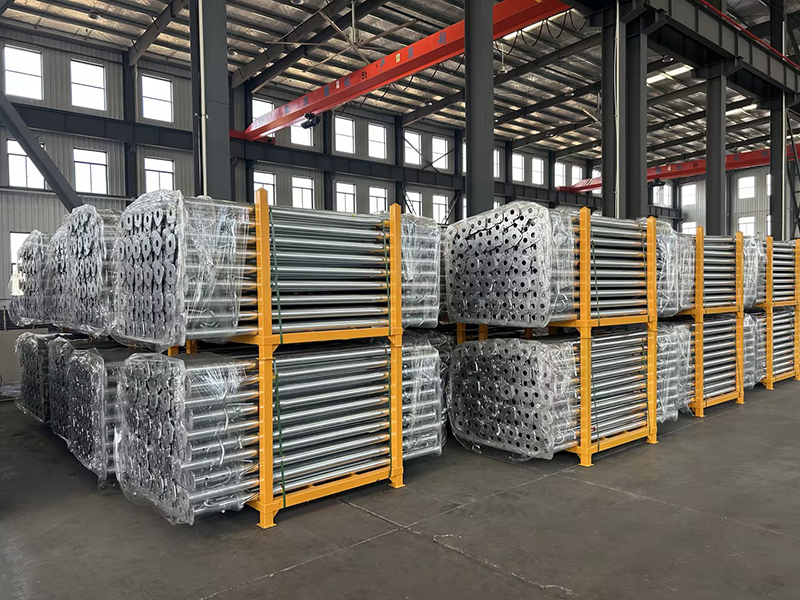
Steel props—also known as shoring props or adjustable acrow props—are telescopic, cylindrical steel support columns. Their height is adjustable, allowing them to provide temporary support for vertical loads during construction, renovation, or demolition projects. They primarily consist of an outer tube, an inner tube, an adjustment mechanism, and base plates. They are simple to use: workers extend or retract the inner tube to the desired height and secure it with an adjustment collar. The steel prop is then positioned to support beams, slabs, or other structures requiring temporary shoring.
How To Choose The Right Steel Prop?
When Selecting Steel Props For A Project, Consider The Following:
Required Working Load — Calculate the expected load (slab thickness + live load) and apply a safety factor (typically 2–3 times the load).
Maximum And Minimum Height — Measure the distance from the ground to the underside of the structure; select a prop with a retracted height less than or equal to the available space and an extended height greater than or equal to the required length.
Tube Diameter And Wall Thickness — Common specifications include: 48×3.0 mm (light-duty), 60×3.0 mm (medium-duty), and 76×3.5 mm (heavy-duty).
Surface Finish — Select based on site conditions (humidity, duration of exposure, frequency of reuse).
Compliance With Standards — Look for EN 1065 (European standard) or other local certifications to ensure quality.
How To Choose A Surface Finish?
The Surface Finish Directly Affects Service Life And Cost. Buyers Often Consider The Following Options:
Painting — Basic corrosion protection; lowest cost; suitable for indoor or short-term use.
Powder coating — More durable and impact-resistant coating; suitable for moderate outdoor environments.
Pre-galvanized — Galvanized before the steel tube is formed; the coating is uniform but relatively thin.
Electro-galvanized — Smooth, glossy finish; moderate rust resistance.
Hot-dip galvanized (HDG) — Thickest zinc layer; ideal for harsh environments and long-term, repeated use.
Hot-dip galvanizing is the preferred choice for export or outdoor projects.
Advantages Of Using Steel Props
Strength and Load-Bearing Capacity: Steel props can withstand heavy loads, making them ideal for supporting large concrete slabs or beams. Their load-bearing capacity ensures worker safety and structural integrity.
Cost-Effectiveness: Steel props are reusable, making them a cost-effective solution for construction projects. They are adjustable to various heights, reducing the need for custom-sized supports or other materials.
Time Savings: Steel props are easy to install and dismantle, saving construction time. This helps accelerate the construction schedule, thereby lowering the total project cost.
Safety: Steel props are manufactured to meet strict safety standards. They provide temporary support that ensures worker safety during construction or renovation, particularly when handling heavy materials.
How To Use Steel Props Safely?
Steel Props Are Reliable And Safe When Used Correctly, But Following Best Practices Is Essential To Ensure Maximum Safety:
Proper Installation: Steel props should be installed according to the manufacturer’s instructions, paying attention to load-bearing limits. Ensure the props are placed on solid ground and properly adjusted to the required height.
Inspection: Before use, always inspect steel props for signs of wear, corrosion, or damage. Damaged props should be replaced immediately to avoid compromising safety.
Load-Bearing Limits: Always adhere to the specified load-bearing limits of the steel props to prevent overloading, which could lead to structural failure.
Regular Maintenance: Steel props should be cleaned, checked for rust, and lubricated regularly to maintain performance and extend their service life.