
Table of Contents
A scaffolding safety gate is a self-closing protective device installed at the access points of scaffolding work platforms; it prevents workers or materials from falling during work at heights. This self-closing mechanism automatically shuts after a worker passes through—eliminating the need for manual closure—thereby ensuring safety on the construction site.
Why Use a Scaffolding Safety Gate?
Scaffolding safety gates bridge the gap between the platform and the ladder access point, preventing accidental falls. A built-in torsion spring quickly pulls the gate back to a closed position after a worker passes through.
Common Types of Scaffolding Safety Gates
Ladder Access Gate
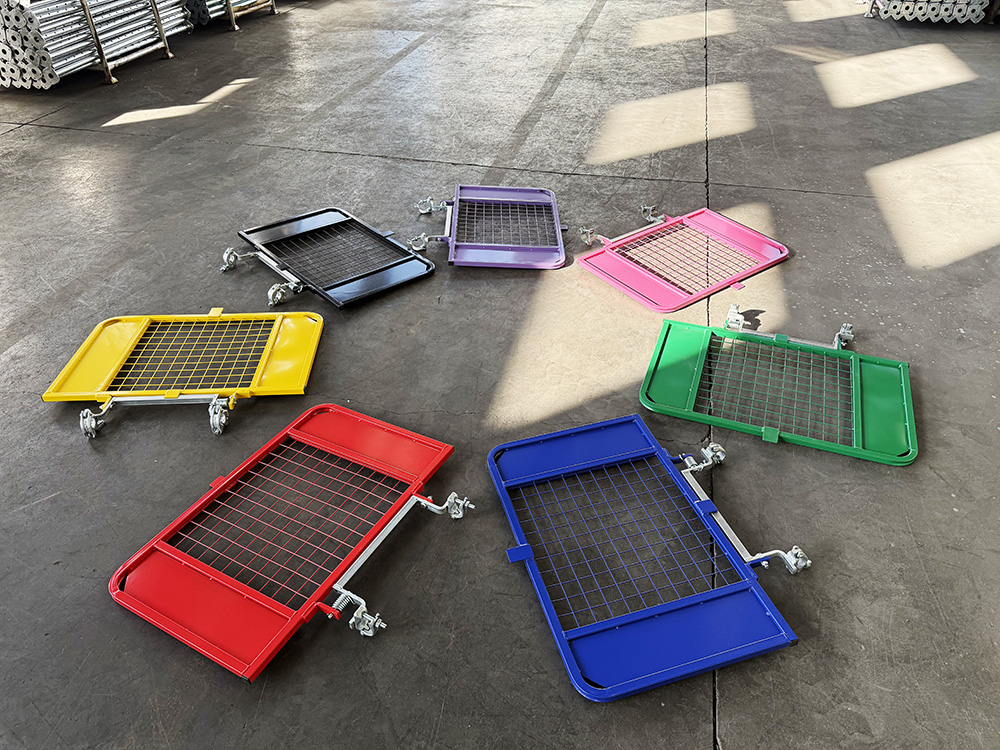
This spring-loaded ladder access gate is designed to prevent falls from heights and includes a toe board for added safety. Equipped with two heavy-duty springs for automatic closing, it enhances both safety and operational efficiency. The product features a reversible toe board (usable in either orientation) and is compatible with various scaffolding systems, such as Ringlock and Cuplock.
Scaffolding Trapdoor
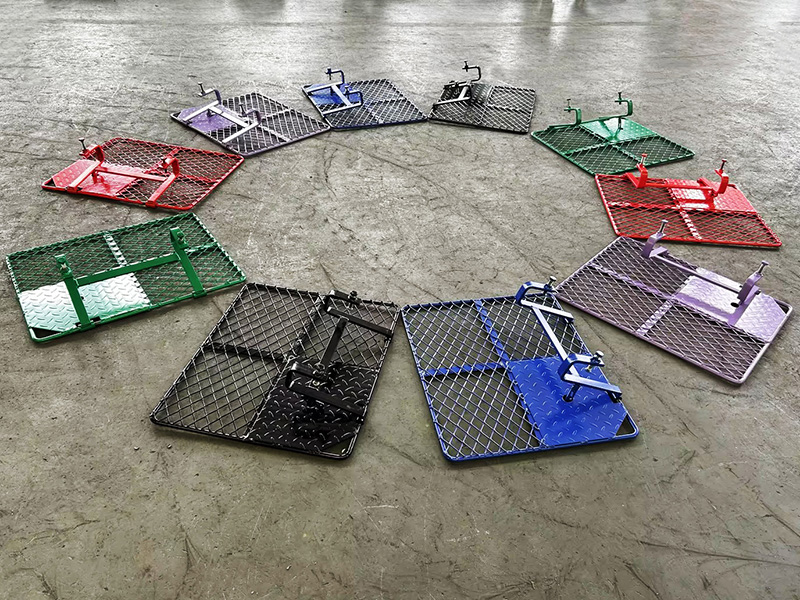
A scaffolding trapdoor (or hatch) is an integrated panel within the platform that allows personnel to move vertically between levels safely, without needing to climb on the outside of the frame. It provides safe access for ladders while maintaining a continuous, safe platform surface when closed.
Adjustable Tube Scaffolding Gate
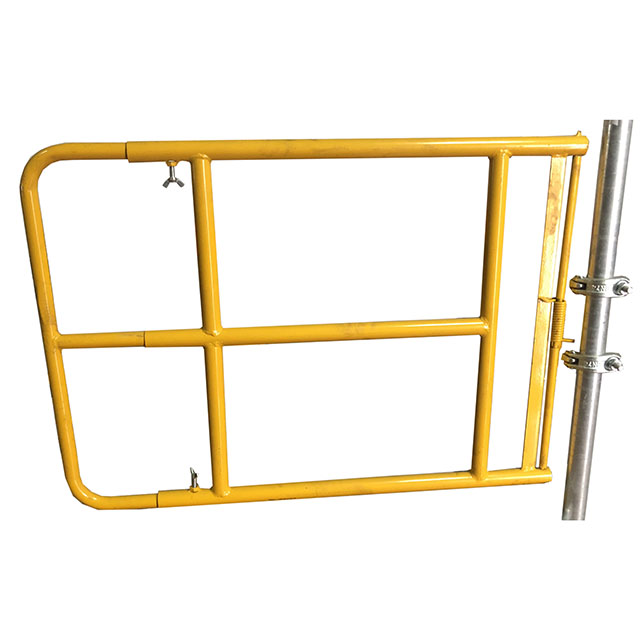
Designed for fall protection at ladder or stair access points. These gates accommodate varying frame widths and typically feature spring-loaded self-closing hinges and bolt-based adjustability. They utilize universal clamps for seamless integration with tube-and-clamp, Ringlock, or Cuplock scaffolding systems.
Installation Guide for Scaffolding Gates
Positioning
Align the safety gate to ensure it hangs vertically, then secure it to the scaffolding standard (upright) or frame.
Fastening
Use a wrench or other tool to tighten all gate fasteners.
Testing
Open and release the gate. It should close completely and smoothly, locking securely without sticking or binding.
Scaffolding Gate Safety Standards
Keep Clear: Ensure the area around the safety gate is free of debris.
Do Not Obstruct: Never tie, wedge, or prop the gate open.
Regular Inspections: Periodically check that bolts are tight and hinge springs are free of rust.
Repair or Replace: Never secure the gate in the open position or use bungee cords to replace a damaged latch. Damaged safety gates should be immediately tagged “Do Not Use.”
Common Applications for Scaffolding Safety Gates
Fixed Ladders and Access Points
Installing a self-closing safety gate at the top of a fixed ladder is a simple, effective way to prevent falls.
Elevated Platforms and Mezzanines
Installing OSHA-compliant safety gates creates safer transition points, preventing accidental falls without hindering the smooth movement of personnel and equipment.
Industrial Walkways and Pedestrian Paths
In fast-paced environments like manufacturing plants or processing workshops, walkways often run alongside machinery or open edges. Metal swing gates provide added safety at entrances, corners, or intersections.
Machine Guarding and Access Control
Safety gates help define safety zones around heavy machinery, restricting personnel access during operation while providing controlled entry for maintenance or inspections.
Restricted Areas and Access Management
In large facilities such as warehouses, logistics centers, or production workshops, commercial safety gates help direct foot traffic, separate pedestrian zones from vehicle routes, and clearly mark restricted areas.