
Table of Contents
What is H-Frame Scaffolding?
H-frame scaffolding is a temporary structure widely utilized in the construction industry. Its defining characteristic is its unique “H”-shaped vertical frame structure; these frames are interconnected by horizontal and diagonal braces, providing a safe and stable working platform for high-altitude operations. Typically constructed from steel or aluminum, this frame scaffolding is precision-engineered to facilitate rapid assembly while ensuring structural robustness.
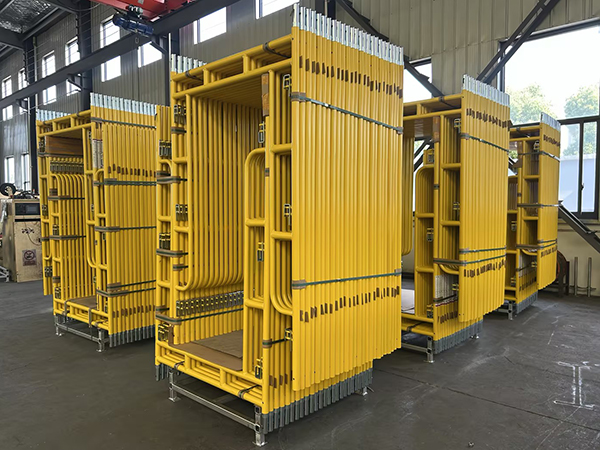
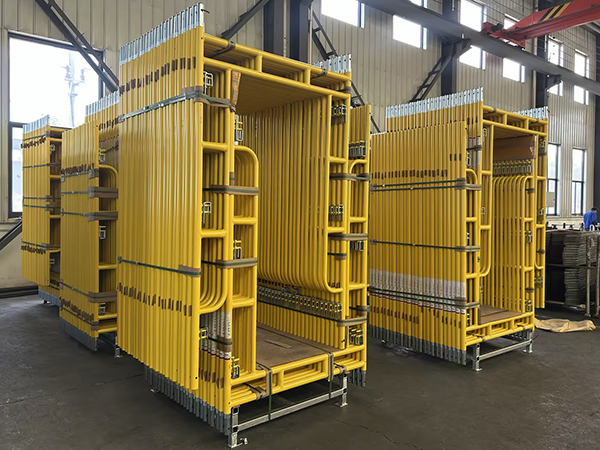
Specifications of H-Frame Scaffolding
Height: 480mm, 914mm, 1219mm, 1524mm, 1700mm, 1930mm, and 2000mm. (Customization is also available based on your specific design drawings.)
Width: 762mm, 914mm, 1200mm, 1219mm, and 1500mm.
Lock Pin Spacing: 914mm, 1219mm, 1524mm.
Tube Wall Thickness: 1.6mm – 4.0mm.
Lock Pin Types: Flick Lock Pin, Fast Lock Pin, Snap-On Lock Pin, etc.
Core Components of H-Frame Scaffolding
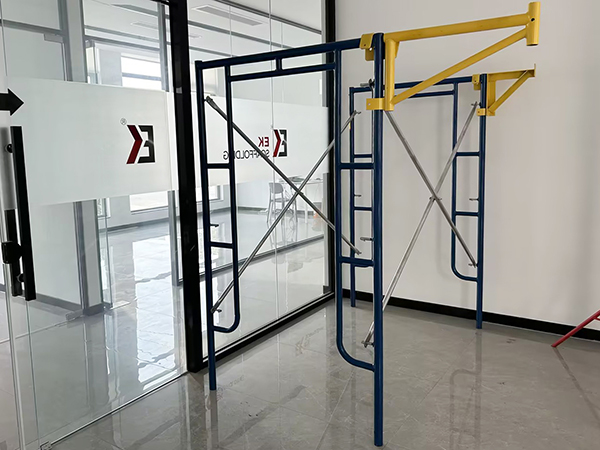
H-Frame (Vertical Frame): The primary vertical load-bearing component, available in various height specifications ranging from 480mm to 2000mm.
Cross Braces and Horizontal Bars: Metal tubes arranged diagonally or horizontally to connect the vertical frames, thereby providing lateral stability.
Scaffolding Boards (Planks): The working platform upon which personnel stand and place tools and materials.
Connecting Pins and Fasteners: Hardware accessories used to vertically stack and join the frames together.
Base Plates and Adjustable Screw Jacks: Located at the base of the scaffolding system, these components are used to level the structure and adapt it to uneven ground surfaces.
Additional Safety Components
Guardrails and Toe Boards: Effectively prevent personnel from falling and stop materials from dropping from elevated heights.
Access Ladders or Ladder Frames: Built-in or external ladder components that ensure personnel can safely ascend and descend the structure.
Connecting Pins and U-Brackets: Facilitate the adjustment of the scaffolding height and ensure a secure, reliable connection between individual frames.
Advantages of H-Frame Scaffolding
- Simple Assembly: All components feature a quick-locking design, enabling rapid erection and dismantling to significantly save on labor time.
- High Load-Bearing Capacity: Standard frames typically offer a load-bearing capacity of up to 300 kg per square meter, capable of meeting the demands of heavy-duty operations.
- Flexible Configuration: The system can be flexibly configured to suit varying height requirements, ground conditions, and specific project needs.
- Reusability: The modular components are reusable, helping to reduce long-term project costs.
- Safety: Complies with international standards (e.g., TS EN 12811-2, EN ISO 3834-3).
H-Frame Scaffolding Assembly Guide
Site Preparation:
Clear the Area: Select a patch of ground that is flat, stable, and free of debris or obstructions. Ensure the ground is completely cleared of clutter and remains level.
Use Base Plates: If the ground is uneven, use base plates or adjustable screw jacks to level the surface; this helps distribute the weight evenly and enhances the stability of the scaffolding system.
Positioning the Frames
Place the H-frames vertically at their designated locations, ensuring the spacing between them corresponds to the intended width and height of the scaffolding structure. Typically, depending on the scaffolding’s height and load-bearing requirements, the spacing ranges from approximately 6 to 10 feet.
Secure the H-frames in place using adjustable base jacks or fixed anchor points to prevent any displacement during use.
Installing Diagonal Braces and Horizontal Crossbars
Connect diagonal braces between the vertical H-frames to form a stabilizing “X” structure. Lock the braces into their designated slots or connectors.
Install horizontal crossbars across each span (bay) to reinforce the structure and provide support points for laying the platform planks.
Use a spirit level to check the frames, ensuring that the entire structure is perfectly vertical and square (at right angles).
Installing the Scaffolding Planks
Lay the scaffolding planks evenly across the horizontal crossbars. Secure the scaffolding plank to the frame using ties, clamps, or scaffolding couplers to prevent them from shifting or sliding.
Installing Safety Devices
Install Toe Boards: Install toe boards along the edges of the platform to prevent tools or materials from rolling off.
Install Guardrails: Install guardrails along all exposed edges to prevent personnel from falling.
Stacking Additional Tiers
Insert Connecting Pins/Couplers: Insert the connecting pins into the hollow tubes at the top of the first-tier frames.
Stack the Frames: Fit the vertical frames for the next tier over the connecting pins.
Secure the Pins: If the connecting pins do not feature built-in spring rivets, insert cotter pins or toggle pins to securely lock the stacked frames together.
Add Diagonal Bracing: As you build upward, periodically install diagonal braces (cross braces) or horizontal braces to maximize the stability of the scaffolding system.
Final Safety Inspection
Before climbing onto the scaffolding or loading materials onto it, perform a final inspection of all pins, latches, and base connections.
– Confirm that all pins and connection points are securely fastened.
– Verify that guardrails and toe boards have been installed on all open sides.
– Confirm that the scaffolding is level and stable.
– Ensure that all components are intact and undamaged.
– Check for any loose fittings or misaligned support bars within the scaffolding structure.
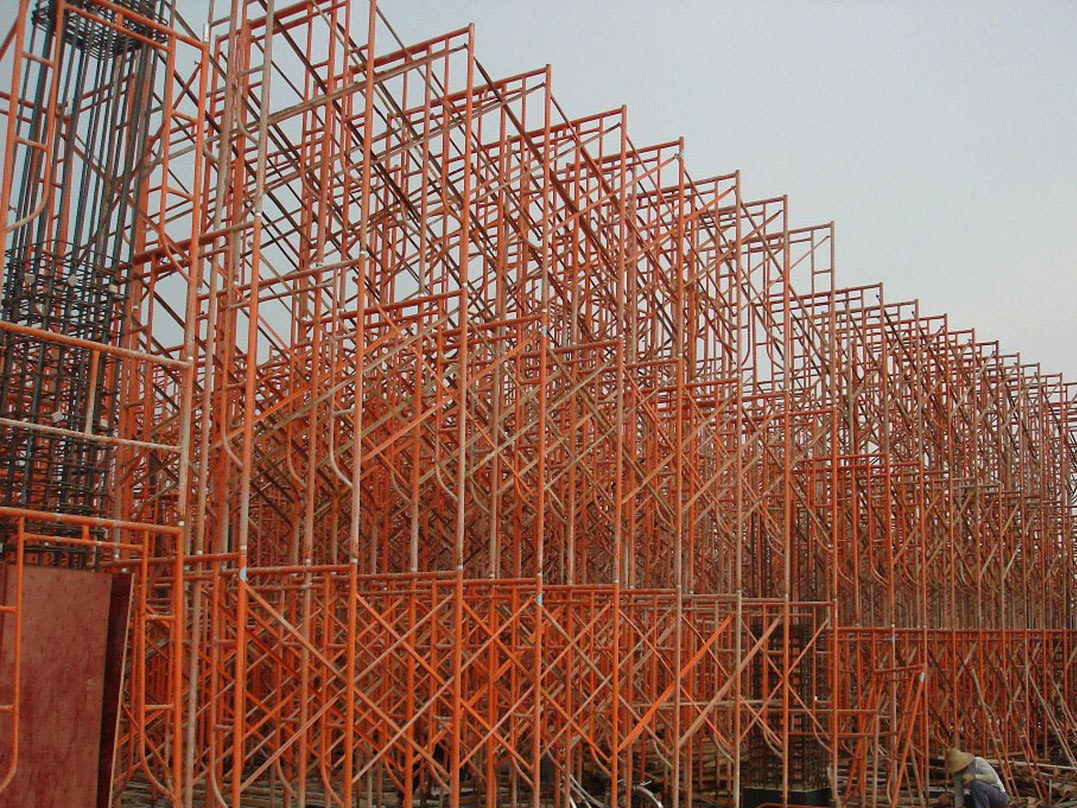
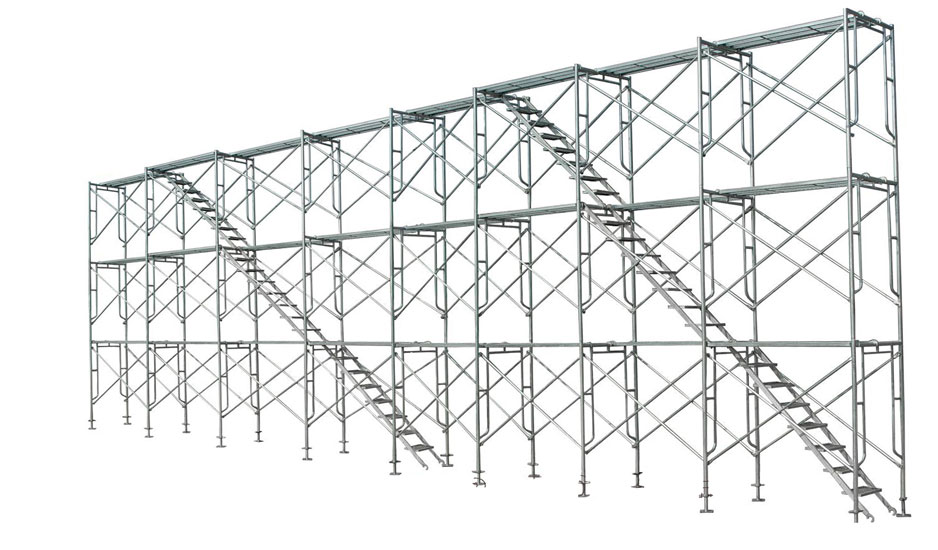
H-frame Scaffolding is Suitable for A Wide Range of Projects, Including:
Residential and commercial construction projects
Maintenance and repair of industrial facilities
Infrastructure construction (e.g., bridges, tunnels, viaducts)
Shipbuilding and marine engineering operations
Construction of stages for events and temporary structures
Restoration and renovation of historic buildings
Why Choose H-frame Scaffolding Manufactured By EK Sca?
EK Sca is an ISO 9001-certified scaffolding manufacturer based in China. We strictly adhere to the ISO 9001 quality management system, ensuring that our H-frame scaffolding consistently maintains high quality across every stage—from steel grade, welding quality, and load-bearing capacity to surface treatment and packaging labeling.
Backed by a professional team of engineers, we require only the height and width of your project—along with whether mobility is required—to provide a tailored solution perfectly suited to your specific needs.