Table of Contents
Within construction formwork systems, the surface treatment applied to steel props is not merely a matter of aesthetics; it directly determines the product’s service life, cost-effectiveness, and safety performance across various geographical environments.
What Are The Common Surface Treatment Methods for Steel Props?
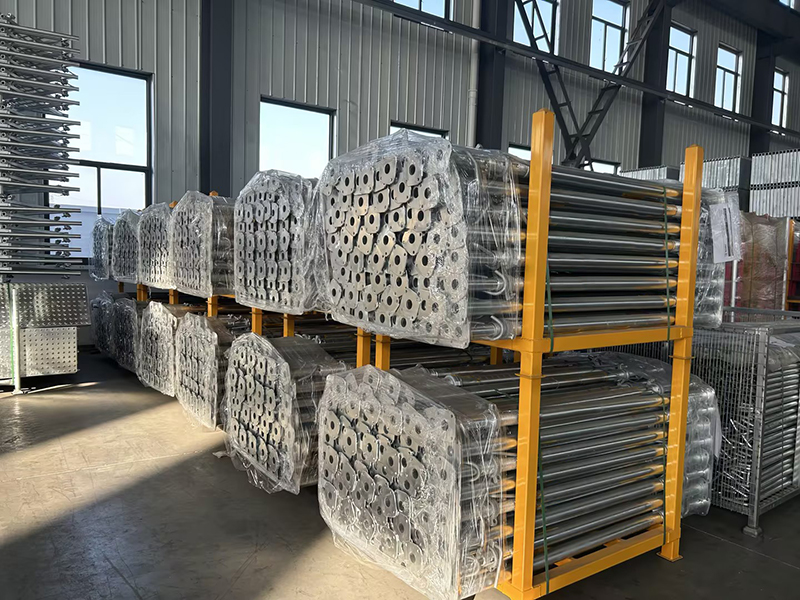
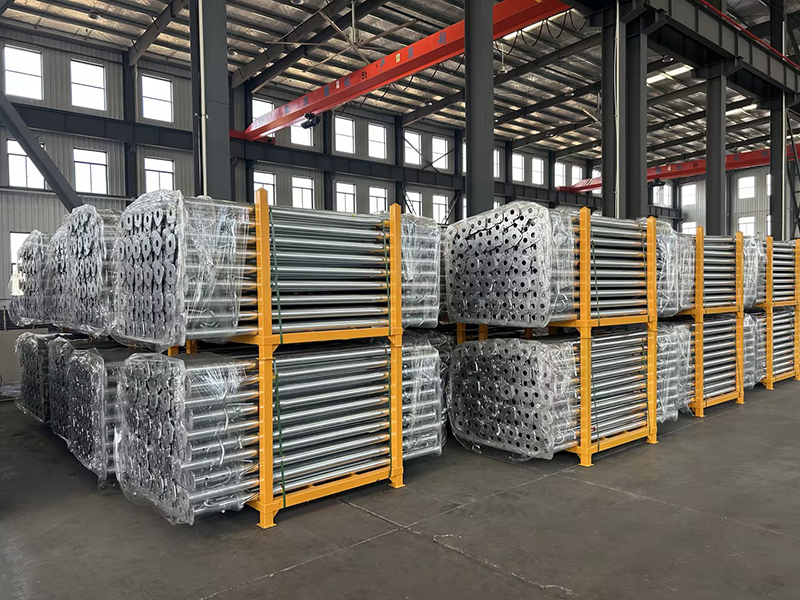
As a professional scaffolding manufacturer, we offer a comprehensive range of steel props that comply with the BS EN 1065 standard, available with a variety of surface treatment options. We hope this guide assists you in selecting the steel props best suited to your needs.
The following details the specific parameters associated with each of these four surface treatment methods.
| Type | Hot Dip Galvanized | Pre Galvanized | Electro galvanize | Painted |
| Color | Industrial Silver (Matte) | Silver-Gray | Silver-White / Pure White (Gloss) | Silver |
| Coating Thickness | 65-85μm | 15-25μm | 8-12μm | N/A |
| Features | High-temperature immersion facilitates a metallurgical reaction between the molten zinc and the steel, resulting in exceptionally strong adhesion. | Fabricated directly from galvanized steel strip, with the weld seams subsequently treated to restore the zinc coating. | Features a flat, smooth surface that ensures minimal resistance during thread adjustment. | Offers the lowest cost; typically utilizes a dip-coating process to ensure complete coverage of both the inner and outer pipe walls. |
| Advantages | Possesses “self-healing” properties: even in the presence of minor surface scratches, the surrounding zinc layer protects the underlying steel through electrochemical action. | High cost-effectiveness: while the cost is lower than that of hot-dip galvanizing, its rust-prevention performance is far superior to that of ordinary paint coatings, making it ideal for large-scale, high-turnover applications. | Smooth surface: resists cement adhesion, ensuring extremely smooth rotation of the adjustment nuts. | Strong coating adhesion and rapid drying speed. |
What data points can users utilize when selecting a surface treatment method for steel supports?
The selection of a surface treatment method involves numerous factors—such as the target market, application scenario, geographical environment, service life, aesthetic requirements, and cost. In the following section, we will compare various surface treatment methods based on these specific aspects.
Specification | Hot Dip Galvanized | Pre Galvanized | Electro galvanize | Painted |
Target Markets | Europe, North America, Australia | Southeast Asia, Latin America | Middle East, South Asia | Africa, Arid Inland Regions |
Application Scenarios | Subway or Large-scale Bridge Projects | General Civil Construction in Southeast Asia | Interior Decoration and Light Construction | Interior Decoration and Light Construction |
Geographical Environment | Coastal and High-Humidity Regions | Coastal and High-Humidity Regions | Arid, High-Temperature Regions | Arid, High-Temperature Regions |
Service Life | Over 10 years | 3-5 years | 2-3 years | 1-2 years |
Cost | High | Medium | Low | Low |
Beyond traditional galvanizing processes, why are an increasing number of large-scale enterprises opting for powder-coated steel props?
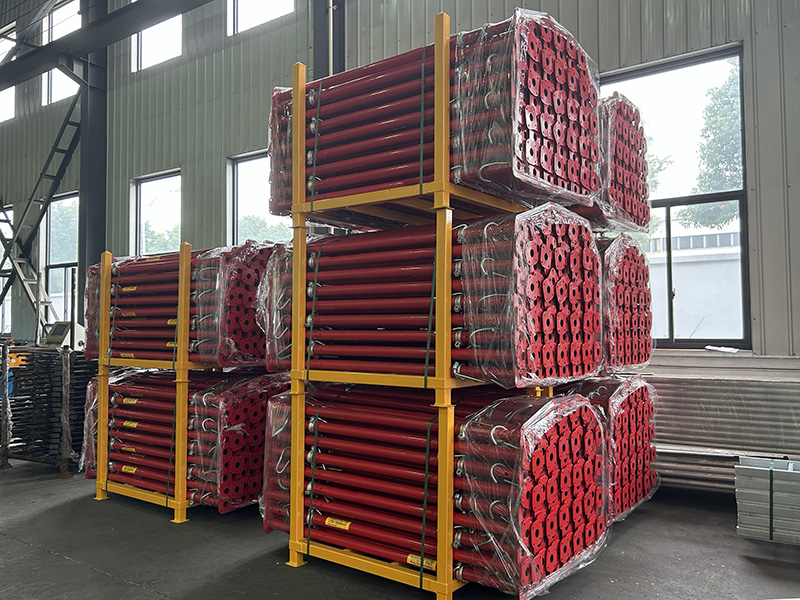
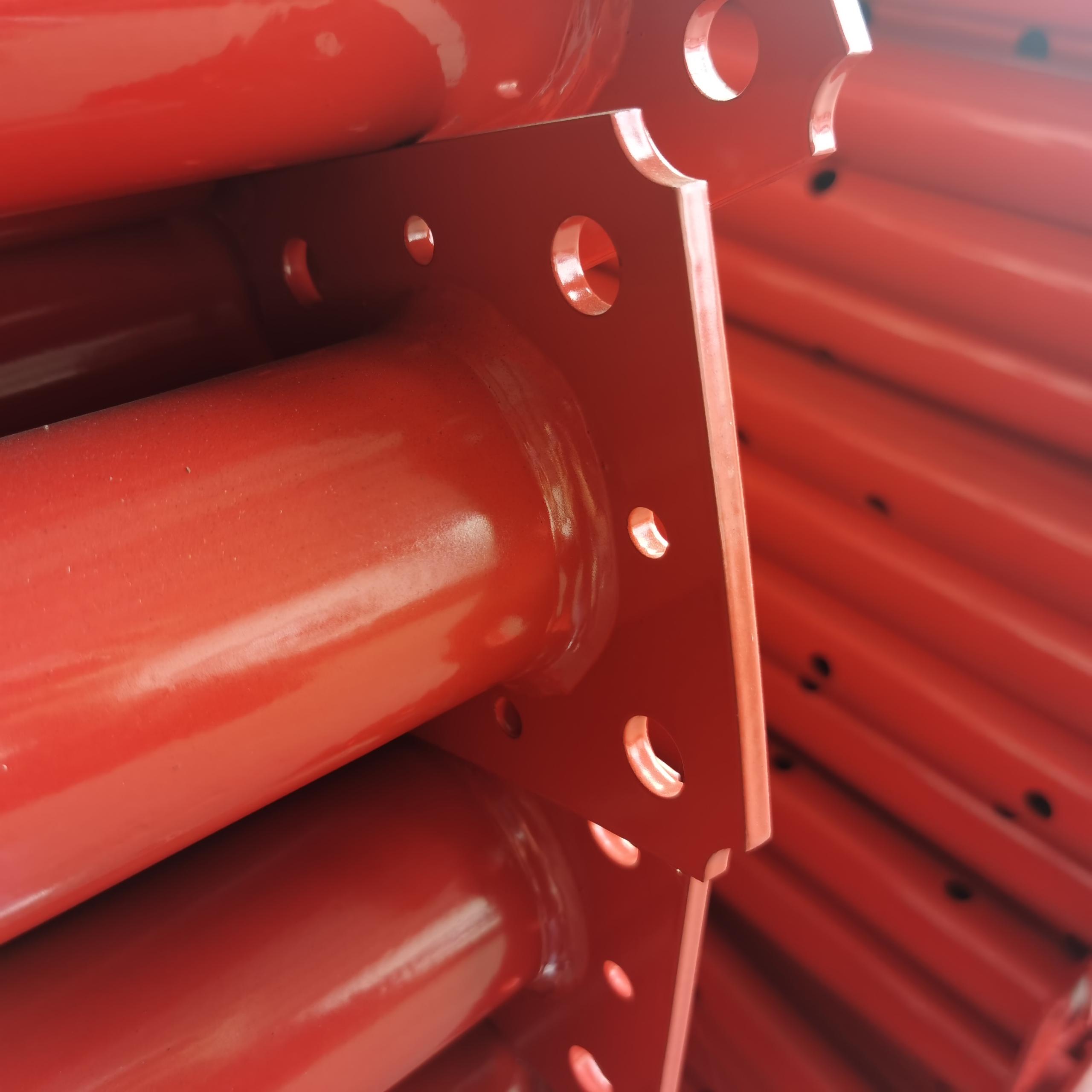
The powder coating process involves using an electrostatic spray gun to apply plastic powder onto steel tubes; after high-temperature baking, this forms a tough, protective film characterized by a substantial coating thickness and strong scratch resistance. This surface treatment method allows for brand customization, enabling clients to align the acrow props with their corporate visual identity. This ensures high visibility on construction sites, thereby facilitating on-site project management and theft prevention. Compared to traditional liquid painting, the advanced powder coating process is lead-free and generates extremely low VOC emissions, fully complying with environmental regulations in Europe and North America.
Application Scenarios:
Branded Construction Sites: Suitable for clients prioritizing brand recognition and seeking to enhance the professional image of their construction sites.
European and North American Residential Markets: Offers an eco-friendly coating that is thicker than traditional paint, providing superior impact resistance and a highly professional aesthetic.
Common FAQs:
Q: What is the salt spray test duration for these steel props?
A: The hot-dip galvanized steel props supplied by EK Scaffolding withstand over 500 hours of salt spray testing without exhibiting any red rust.
Q: Does the adhesion of the powder coating meet the standards for the Cross-cut Test?
A: EK Scaffolding’s powder-coated steel props successfully pass the Cross-cut Test, with no surface peeling or detachment occurring.
Q: Are both the interior and exterior surfaces of the steel props coated?
A: All steel props supplied by EK Scaffolding undergo galvanization on both their interior and exterior surfaces; this effectively prevents internal corrosion and extends the overall service life of the props.
Are you looking for a high-quality supplier of steel props?
As a professional scaffolding manufacturer, we offer a comprehensive range of steel props that comply with the BS EN 1065 standard, available with a variety of surface treatment options. We hope this guide assists you in selecting the steel props best suited to your needs.